1905 aviation history
Wright Flyer III
A handcrafted four-channel replica brings the final 1905 Flyer design—and its pioneering wing-warping controls—into the school gym.

A precise tribute to the Wright brothers’ practical airplane.
The Wright Flyer III was the Wright brothers’ final 1905 design, completed before the military trials that began in 1908. It transformed their early experiments into a practical airplane capable of longer, controlled flight.
This radio-controlled replica was handcrafted by the late George Harris with extraordinary attention to the full-size aircraft. Its wing-warping system and full-span, four-channel controls let students see how the Flyer’s structure and movement worked together.
At a glance
Wingspan
28 in
Length
19.25 in
Weight
103 g
Battery
2S 120 mAh LiPo
Builder
George Harris
Controls
Wing warping, 4 channel
A timeline built to fly.
Four distinct aircraft help students compare purpose, shape, propulsion, and the pace of aviation development.
Wright Flyer III
George Harris’s carefully handcrafted replica uses wing warping and full-span, four-channel control to recreate the structure and movement of the 1905 Flyer.
Wingspan28 in
Length19.25 in
Weight103 g
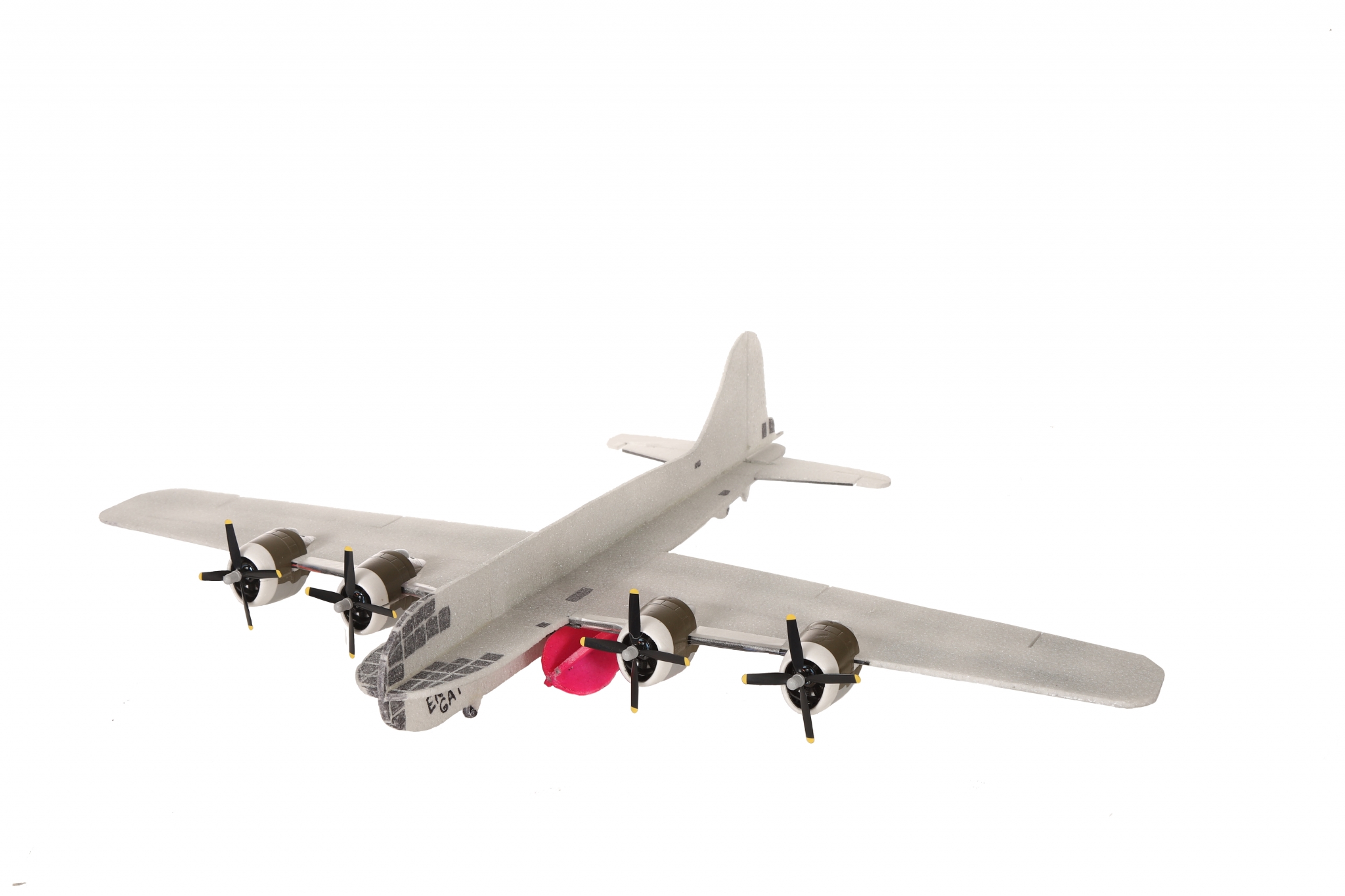
B-29 Superfortress
Nathan Myers built this four-engine foam aircraft for the World War II portion of the show’s aviation timeline.
Wingspan45 in
Length34 in
Weight8.5 oz

F-35 Racer
A Litespeed-built electric ducted-fan model used in the present-day history segment and a spirited racing demonstration.
Wingspan27 in
Length38 in
Weight11 oz
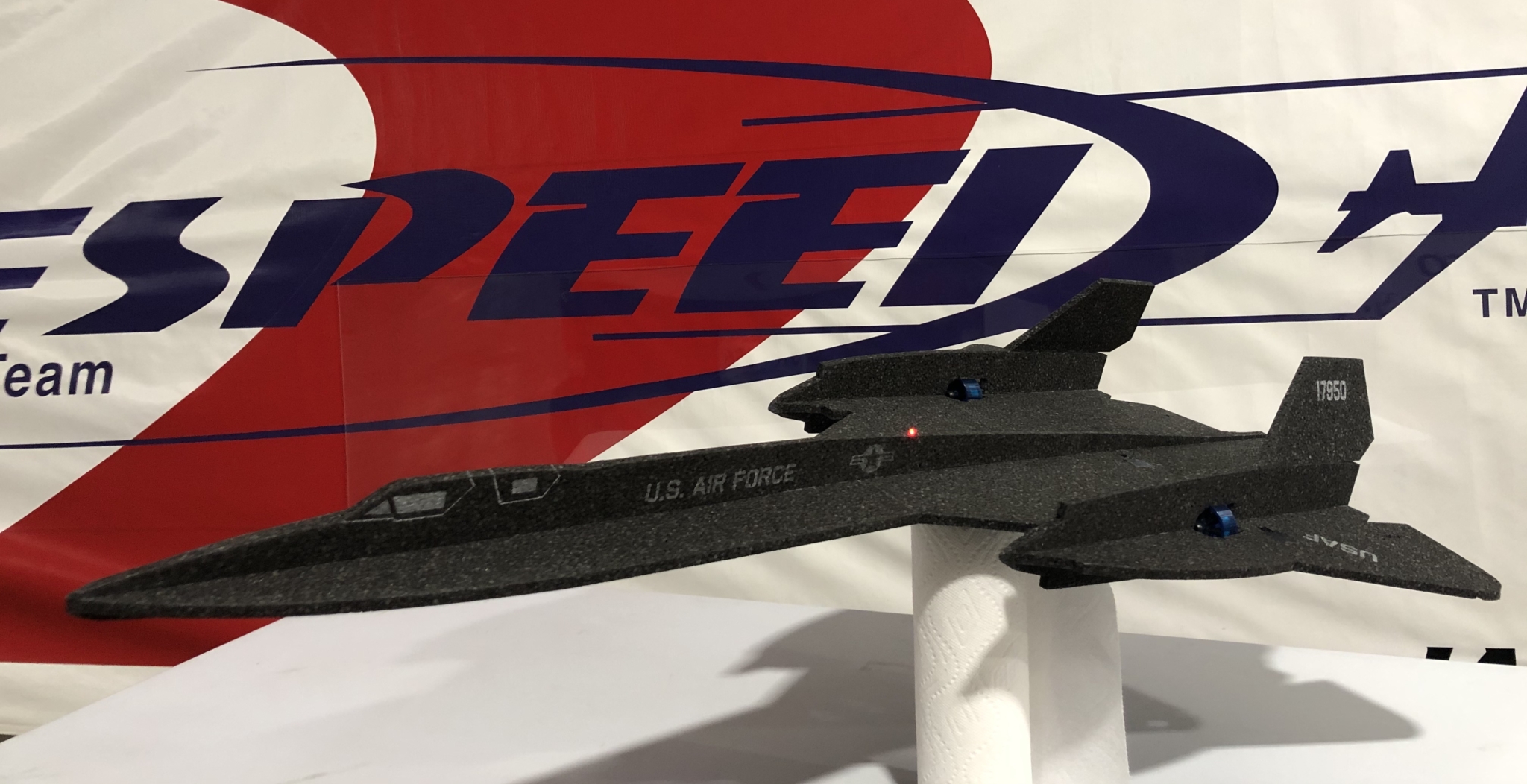
SR-71 Blackbird
A long, slender twin-fan model created for the Cold War segment and inspired by the record-setting reconnaissance aircraft.
Wingspan25.5 in
Length47.5 in
Weight13.5 oz
See it in the show.

What elementary students can notice.

Wing warping changes roll
The Flyer shows how twisting the wing structure helped the Wright brothers control bank before modern ailerons became standard.

Structure carries the load
Its bracing, stacked wings, and lightweight frame reveal how early designers balanced strength against weight.

Iteration made flight practical
The 1905 Flyer III demonstrates how testing, observation, and repeated improvements can transform an experiment into a practical design.