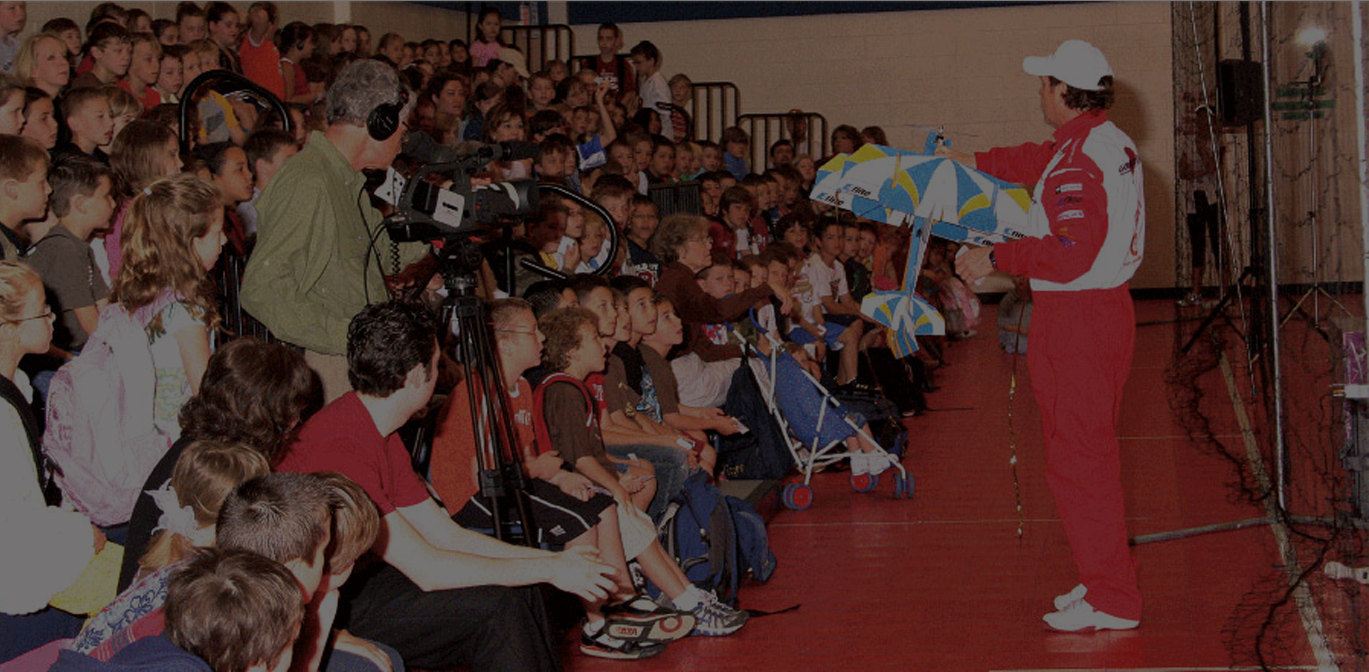
Indoor aerobatics
Twisted Hobbys
Lightweight, durable aircraft that make precise aerobatics possible inside even the tightest school gyms.
Built to perform where the audience can see every move.
The Twisted Hobbys Super Lite series is a staple of the Litespeed aerobatic demonstrations. EPP foam, carbon reinforcement, and generous control surfaces give the pilots a useful blend of low weight, durability, and precision.
That combination matters in a gym, where space is limited and every maneuver happens close enough for students to follow. The colorful airframes also make control inputs, orientation, and each sponsor-supported flight easy to see from the bleachers.
At a glance
Aircraft type
Indoor R/C aerobatics
Primary material
EPP foam
Environment
School gyms
Radio systems
Spektrum
The indoor aerobatic lineup.
Each airframe has a different role, from slow control demonstrations to high-energy stunts and aviation storytelling.
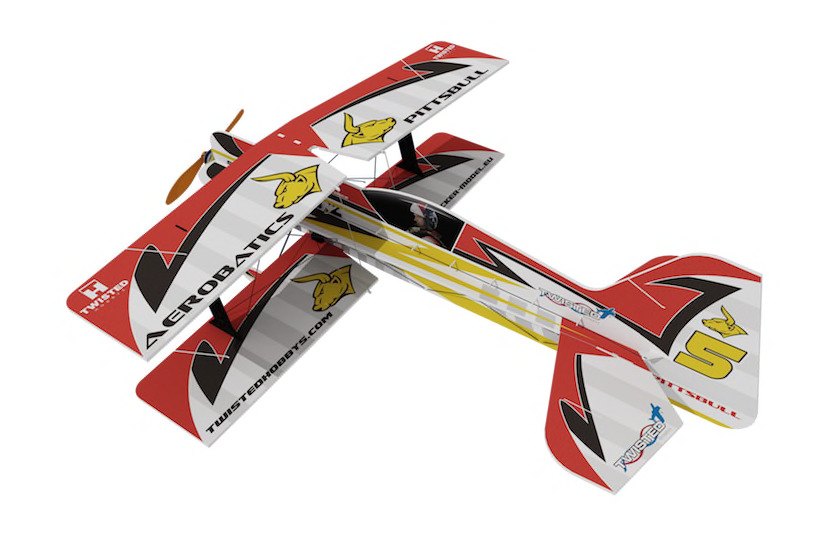
PittsBull
A compact biplane inspired by the Pitts Model 12, with large control surfaces and a full-flying elevator for an energetic opening stunt.
ConstructionEPP + carbon
ConfigurationBiplane
RoleOpening aerobatics
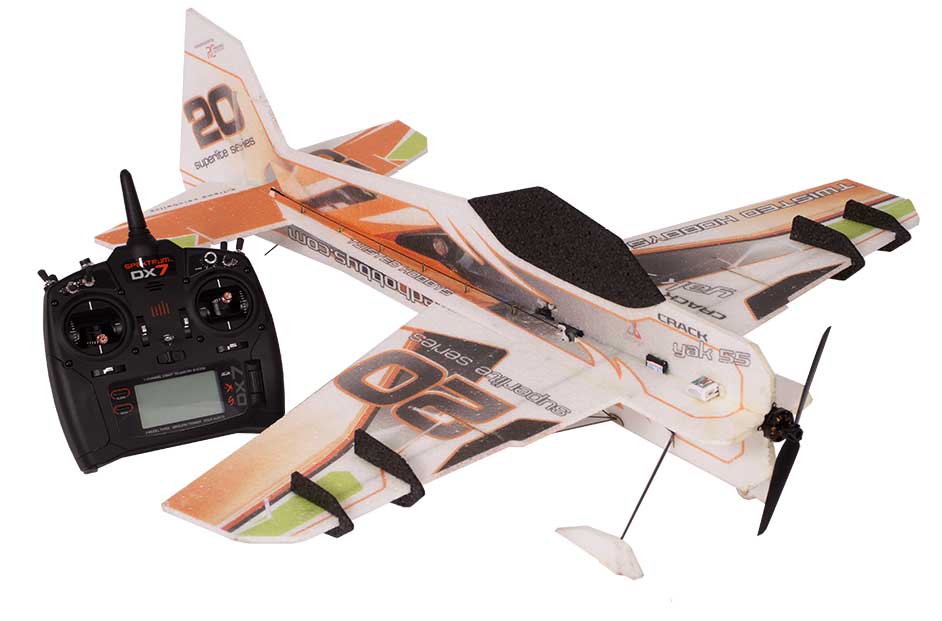
Crack Yak 55
A responsive Super Lite aerobatic model that combines low weight with the toughness needed for frequent school performances.
Wingspan30 in
Length33 in
Weight6.7 oz
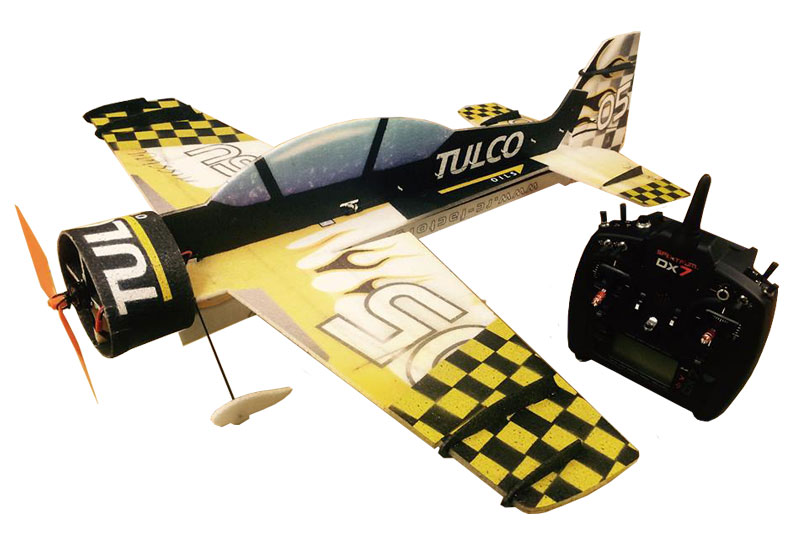
SU-29
A larger custom aircraft whose color and presence carry a sponsor’s identity clearly across the gym.
Wingspan33 in
Length33 in
MaterialEPP foam
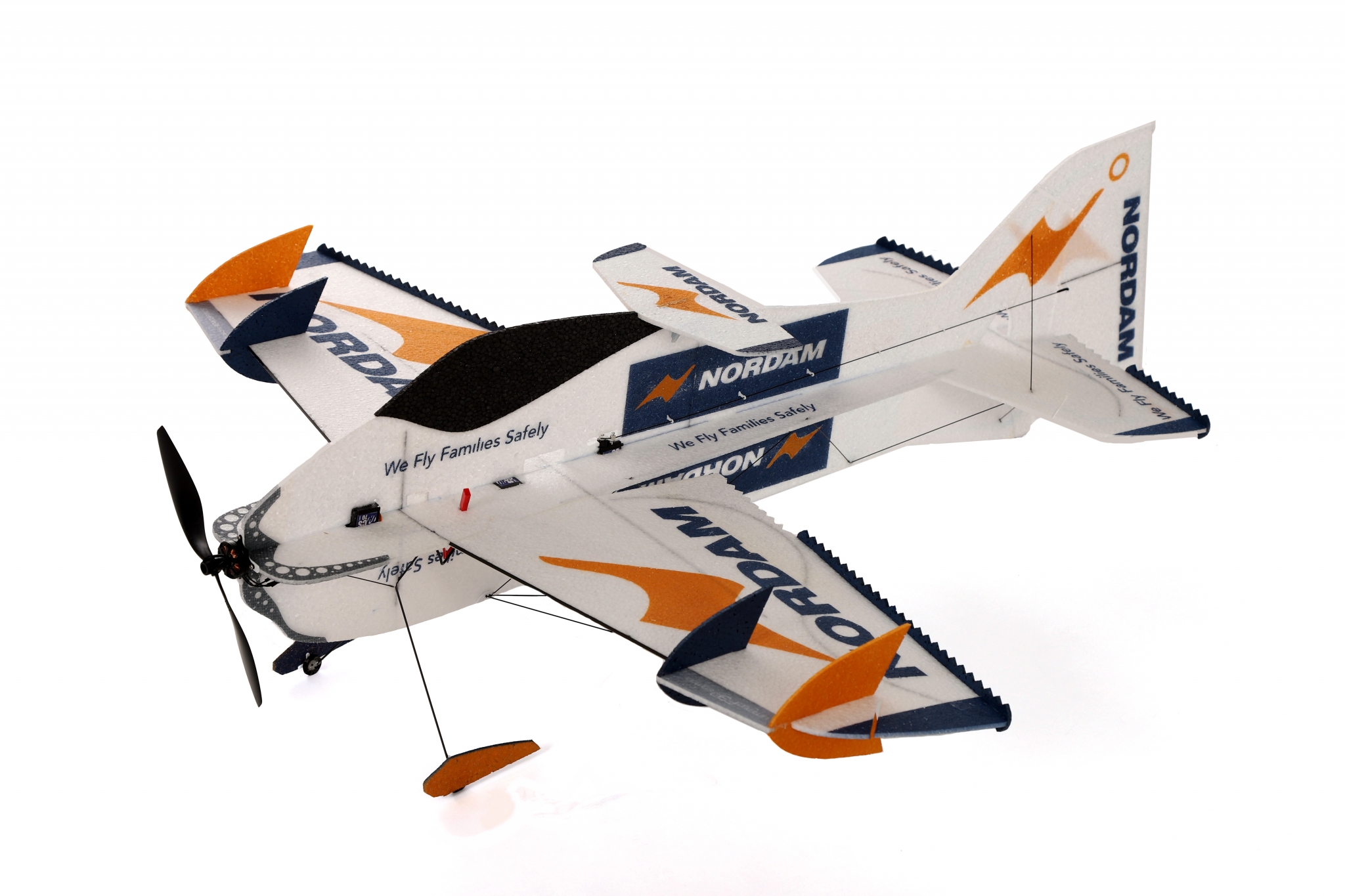
Clik R2
Its very low flying weight, slow-flight behavior, and large control surfaces make it a strong visual aid for control demonstrations.
Wingspan33 in
Length37 in
Weight4.8 oz
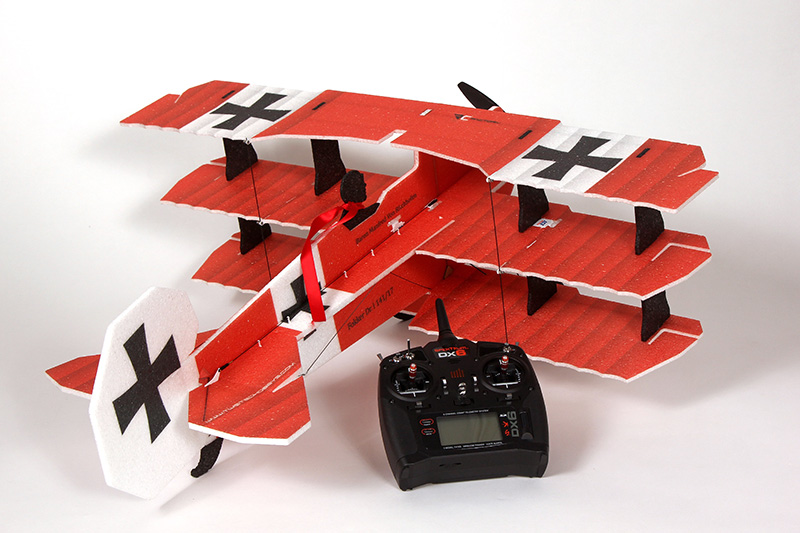
The Red Baron
A Crack Fokker DR1 tri-plane used in the World War I storytelling segment opposite Snoopy’s aircraft.
Wingspan35 in
Length34 in
Weight8.1 oz
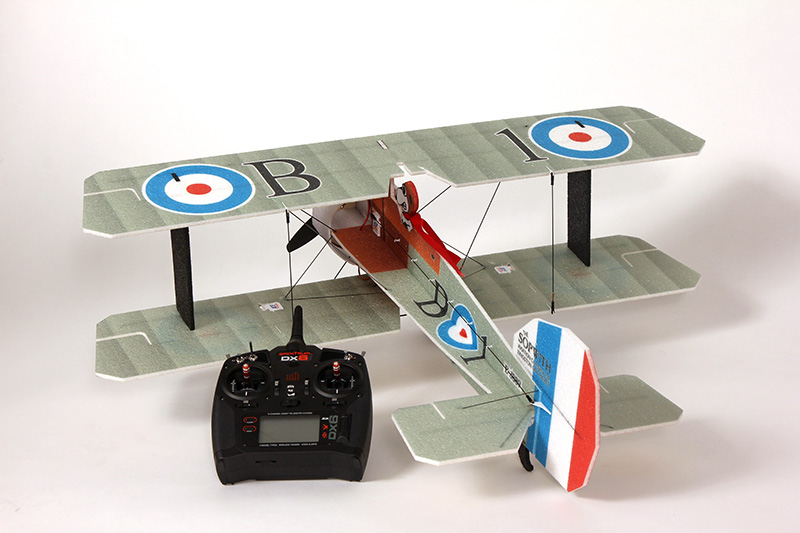
Snoopy
A Crack Camel model that turns a familiar story into a memorable bridge between early aircraft and modern flight.
Wingspan35 in
Length28.5 in
Weight8.2–9 oz
What elementary students can notice.

Control surfaces
Large ailerons, elevators, and rudders make the aircraft’s response to pilot inputs easy to observe.

Materials and weight
Light EPP structures show why aircraft materials must balance strength, mass, and repairability.

Practice and precision
Close indoor flying demonstrates preparation, coordination, and the value of repeated practice.